Penetration Testing for SOC 2 Compliance: Essential Requirements 2026
SOC 2 does not explicitly require penetration testing — but auditors expect it, and the Trust Service Criteria are far easier to evidence with one. A SOC 2 pentest simulates real attacks against the systems in your audit scope, maps findings to the five Trust Service Criteria, and should run at least annually (or after major changes). Gray-box testing is the usual best fit.




Updated August 12, 2026
AI Summary


SOC 2 (Service Organization Control 2) measures how well you protect, manage, and process customer data based on the American Institute of Certified Public Accountants (AICPA) principles.
Demonstrating strong SOC 2 compliance is a crucial step toward earning clients’ trust and standing out in today’s security-conscious market. Penetration testing plays a vital role in this process by showing how your controls perform against real-world threats rather than just on paper.
In this article, we explain the essential steps, emerging trends, and best practices for effectively incorporating penetration testing into your SOC 2 strategy.
» Need SOC 2 penetration testing services? Get a scoped penetration testing quote tailored to your environment and compliance requirements.
Does SOC 2 require penetration testing?
SOC 2 does not explicitly mandate penetration testing. The AICPA Trust Service Criteria never name it as a required control. In practice, however, nearly every auditor expects to see recent pentest results as evidence that your security controls work under real attack conditions, and many enterprise customers require them independently of the audit. Treat a SOC 2 pentest as practically required, even though it is technically optional.
SOC 2 Type 1 vs. Type 2 Penetration Testing
Penetration testing timing may vary depending on the type of SOC 2 engagement. For a SOC 2 Type 1 audit, testing is often completed before the assessment to demonstrate that security controls are properly designed and implemented at a specific point in time.
For SOC 2 Type 2 penetration testing, organizations commonly perform testing before or during the observation period. This approach allows teams to remediate identified vulnerabilities and demonstrate that security controls operate effectively throughout the reporting period.
Why SOC 2 penetration testing matters
Penetration testing for SOC 2 compliance focuses on simulating real-world cyberattacks to confirm whether your security measures genuinely defend against breaches. In other words, penetration testing boosts cybersecurity by bridging the gap between theoretical compliance and actual security.
Penetration testing is an important component of SOC 2 security testing because it helps organizations validate whether security controls can withstand realistic attack scenarios and protect sensitive systems and data.
You may already use audits to verify policies and controls on paper, but pentesting reveals how well those controls perform under active attack. By doing so, you bolster stakeholder trust, protect sensitive data, and meet the rigorous demands of SOC 2’s Trust Service Criteria (TSC).
Here's why penetration tests are vital for your business:
- Uncover hidden vulnerabilities: Pentests often reveal security gaps that standard audits may not identify
- Validate security controls: Pentesting ensures each control works in practice, not just on paper.
- Protect stakeholder trust: Clients and regulators want proof you take data protection seriously.
- Stay ahead of evolving threats: Ongoing pentests let you adjust strategies as attack methods change.
Adversary emulation is a specialized form of testing where security teams adopt the same techniques, tactics, and procedures as real-world attackers. This method highlights which controls function well and where you must improve, ensuring you’re continually prepared for emerging threats.
Scalable SOC 2 Pentesting for Startups
Validate security controls with thorough penetration testing
Leverage real-world threat simulations to uncover hidden vulnerabilities
Streamline documentation and audits with expert guidance
Vulnerability scanning vs. pentesting
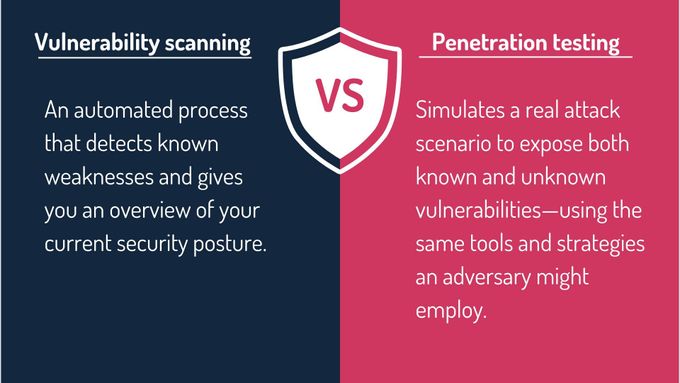
Although scanning can be faster and more cost-effective, pentests provide deeper insights by actively trying to exploit possible weaknesses. It goes beyond checking boxes and offers a more realistic measure of whether you can protect sensitive data—one of the core objectives under SOC 2.
Here's a quick summary of the key differences between penetration testing and vulnerability scanning for SOC 2 compliance:
Point of Comparison | Penetration Testing | Vulnerability Scanning |
|---|---|---|
Time | More time-consuming due to manual testing and analysis | Faster due to automated scanning tools |
Cost | Typically higher because of the specialized expertise required | Generally lower because automation reduces labor |
Depth | Discovers both known and unknown vulnerabilities; demonstrates real impact | Focuses on identifying known vulnerabilities and doesn't exploit them |
» Learn how penetration testing for SOC 2 supports Type 2 audit readiness and demonstrates ongoing control effectiveness throughout the observation period.
Types of SOC 2 penetration testing
When it comes to SOC 2 compliance, you can choose among three main types of penetration testing:
- Black-box
- White-box
- Gray-box
Each approach varies in the level of system knowledge granted to testers and in how closely the test environment resembles an actual attack scenario.
While black-box testing offers an external view and white-box focuses on internal details, gray-box testing often strikes the ideal balance by combining partial knowledge of the system with realistic attack simulations.
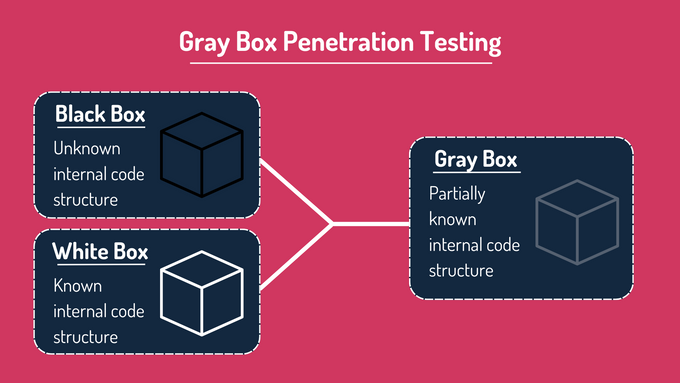
Pros and Cons of Each Approach
1. Black-Box Testing
Pros
- Mimics a completely unknown attacker’s perspective
- Uncovers vulnerabilities visible from the outside
Cons
- May miss deep or internal weaknesses
- Can require more time and resources to explore every path
When to choose black box: You want to see how an attacker without prior knowledge could breach your public-facing services.
2. White-Box Testing
Pros
- Offers complete visibility into code, architecture, and configurations
- Typically covers more ground quickly
Cons
- Less representative of an external threat actor’s methods
- Testers might focus too heavily on known flaws
When to choose white box: You have complex systems needing thorough code reviews or are testing under tight time constraints.
3. Gray-Box Testing
Pros
- Balances external attacker realism with insider knowledge of the system.
- Efficiently finds both obvious and hidden issues.
Cons
- Requires careful scoping to ensure testers use partial system insights effectively.
Why gray-box pentesting is best for SOC 2: You simulate a real-world attacker who knows some aspects of your systems, uncovering subtle weaknesses without losing the external attacker’s viewpoint.
» Learn more: Our guide to gray-box penetration testing
Common vulnerabilities uncovered in SOC 2 pentests
Penetration tests designed for SOC 2 often reveal several recurring security issues that can jeopardize customer data. By identifying and preventing cybersecurity disasters, you can prioritize fixes that bolster your compliance efforts and protect key business functions.
1. Weak Authentication and Authorization
Attackers can easily gain unauthorized access to sensitive data if systems lack strong passwords, multi-factor authentication, and proper access controls.
How to fix or prevent this:
- Enforce robust password policies and multifactor authentication (MFA)
- Conduct periodic access audits, ensuring every user has the least privilege needed to perform their tasks
2. Unpatched Software and Known Vulnerabilities
Outdated software with known security flaws can be exploited by attackers to compromise systems and steal data.
How to fix or prevent this:
- Implement a structured patch management program
- Use automated tools to detect outdated software and apply updates promptly before attackers exploit them
3. Misconfigured Cloud Services
Improperly configured cloud storage, databases, and other services can expose sensitive data to unauthorized access.
How to fix or prevent this:
- Review cloud configurations regularly, limiting user privileges and encrypting sensitive data
- Platforms like AWS Config or Azure Security Center can help identify gaps quickly
4. Insecure APIs
An API pentest for SOC 2 should cover authentication, authorization, rate limiting, and data exposure across every endpoint in your audit scope — see our API penetration testing service for scoping guidance.
Weaknesses in application programming interfaces (APIs) can allow attackers to bypass security controls and access sensitive data or functionality.
How to fix or prevent this:
- Conduct in-depth code reviews, implement secure coding practices, and deploy Web Application Firewalls (WAFs).
- Run API security tests before each release cycle to catch potential flaws early.
SOC 2 penetration testing requirements & best practices
While SOC 2 doesn’t explicitly mandate penetration testing, the framework strongly encourages it through its Trust Service Criteria (TSC). Most auditors also advocate regular pentests as a proactive measure.
In doing so, you satisfy auditors and reassure customers that you take data protection seriously. Successfully integrating penetration testing into your SOC 2 efforts requires a well-defined, repeatable, and secure development lifecycle.
Here are the basic steps to follow for pentesting:
- Scope: Identify critical assets, data flows, and systems that require testing.
- Testing: Security specialists (internal or external) simulate real-life attacks, then map each vulnerability to its relevant TSC.
- Remediation: Prioritize fixes by severity, focusing on the most critical issues first.
- Retesting: Confirm that no new weaknesses have emerged and that existing gaps are fully resolved.
SOC 2 Pentest Requirements Checklist
Before undergoing a penetration test, organizations should ensure the following requirements are addressed:
- Define the scope of systems, applications, APIs, and cloud environments to be tested
- Identify internet-facing assets and critical business systems
- Document applicable compliance and customer requirements
- Confirm testing authorization and stakeholder approval
- Establish remediation and retesting procedures
- Review vulnerability management and patch management processes
- Determine whether internal, external, web application, or API testing is required
- Prepare evidence and documentation for auditors
- Address critical vulnerabilities before the audit begins
- Schedule remediation validation and retesting activities
» Not Sure What Testing Your Auditor Expects? Get a scoped SOC 2 penetration testing quote and expert guidance on your testing requirements.
Scope Your Penetration Tests
Defining the boundaries of your SOC 2 penetration test is essential for accurate results. You should include all critical assets that store, process, or transmit sensitive data—from user-facing SaaS or web platforms to administrative portals, APIs, and internal infrastructure.
This strategy ensures you address both external threats and potential internal weaknesses. Conducting tests in a staging environment is also advisable so you can spot and remediate vulnerabilities without risking live operations.

Prioritize Key Areas During SOC 2 Penetration Tests
When scheduling your tests, you should pay special attention to systems that handle the highest volume of sensitive data or regularly interface with the internet. By targeting these critical points first, you minimize the risk of a serious breach and ensure continuity for essential business processes.
High-sensitivity systems to consider include:
- Network infrastructure: Firewalls, routers, and load balancers that regulate data traffic.
- Web applications: Publicly accessible websites and SaaS platforms where users submit critical information.
- APIs: Bridges between different services and databases, often carrying sensitive transaction data.
- Internal systems: Administrative tools and corporate networks that insiders or lateral attacks can exploit.
Frequency and Triggers for Testing
You should perform SOC 2 penetration tests at least once a year to stay ahead of evolving threats. However, you must also retest whenever significant changes occur in your environment. These triggers may include large-scale cloud migrations, software deployments, and security incidents.
Industry Variations and Challenges
SOC 2 penetration testing requirements can shift depending on your sector. Here are some top concerns by industry:
- Education: FERPA compliance and distributed network infrastructures.
- Finance: Identity theft and large-scale fraud risks.
- Healthcare: HIPAA compliance and patient privacy violations.
Documentation and Reporting
Your penetration testing report should be both comprehensive and accessible. Achieve this by following these steps:
- Begin with an executive summary highlighting major findings and risk levels in plain language
- Follow with a methodology and scope overview, explaining exactly how you conducted the test
- Present vulnerabilities in order of severity, accompanied by actionable remediation steps and evidence like screenshots or logs
- Finally, map each finding to the relevant SOC 2 Trust Service Criteria to demonstrate precise alignment with compliance requirements
Balancing Cost and Complexity While Meeting SOC 2 Requirements
SOC 2 penetration testing can become resource-intensive, but you have practical strategies to keep costs manageable without sacrificing security. By prioritizing high-impact areas first and adopting a gradual test plan, you can align with auditor expectations, maintain ongoing compliance, and keep your data safe.
- Phased testing: Focus first on the systems handling the most sensitive data, then expand to lower-risk areas. This approach spreads out the investment, making it easier to incorporate improvements over time.
- Timely remediation: Address vulnerabilities as soon as you find them, prioritizing by severity. Prompt fixes minimize risk exposure and help you maintain continuous SOC 2 readiness.
- Leverage automated tools: Use scanning and detection tools for initial vulnerability sweeps. Automation speeds up the discovery of common weaknesses and frees your team to handle complex, manual testing scenarios.
- Adopt a risk-based approach: Assess which assets carry the greatest potential impact if compromised and focus resources accordingly. This ensures you tackle the highest risks first.
Penetration testing for compliance: SOC 2, ISO 27001, and PCI DSS
Compliance penetration testing serves multiple frameworks from one engagement. SOC 2 and ISO 27001 both treat pentesting as expected evidence rather than an explicit mandate, while PCI DSS Requirement 11 makes it compulsory. If you pursue several frameworks, scope one test to cover the superset of systems and map each finding to every framework it satisfies — one pentest, multiple audits. This is where a combined approach saves real money.
Mapping pentest results to the Trust Service Criteria
Penetration testing drives real-world insights into how your security controls perform under attack. By aligning these findings with the five SOC 2 Trust Service Criteria (outlined below), you gain a clear view of where you meet compliance requirements and where you need to strengthen defenses.
Here are the five SOC 2 Trust Service Criteria (TSC):
- Security: Testing reveals how effectively your safeguards block unauthorized access.
- Availability: You maintain uptime and service reliability by identifying disruptions before they occur.
- Confidentiality: Pentest results show if sensitive data could be exposed and guide remediation steps.
- Processing integrity: Risk assessments ensure data processing workflows aren’t prone to tampering or errors.
- Privacy: A thorough test uncovers gaps in personal data protection, supporting regulatory compliance.
Here's how SOC 2 pentest outcomes align with each TSC:
TSC Domain | Pentesting Objectives |
|---|---|
Security | Identify exploitable weaknesses that compromise security controls. |
Availability | Ensure systems remain accessible even under malicious attempts. |
Confidentiality | Protect sensitive information from unauthorized exposure. |
Processing integrity | Validate accuracy and completeness of data throughout transactions. |
Privacy | Verify compliance with data privacy rules and highlight potential leaks. |
GRSee: Your Partner for SOC 2 Penetration Testing and Security Compliance
At GRSee Consulting, we help organizations strengthen security and simplify compliance through expert-led cybersecurity services across cloud environments, applications, and infrastructure. Our team works closely with your stakeholders and auditors to assess security controls, identify gaps, and develop a tailored roadmap for SOC 2 readiness.
Our SOC 2 penetration testing services help organizations identify vulnerabilities, validate the effectiveness of security controls, and generate the evidence needed to support successful SOC 2 audits. Each assessment is performed with auditor expectations in mind and includes actionable remediation guidance to help address identified risks.
Beyond penetration testing, we support the entire compliance journey—from readiness assessments and gap analysis to remediation planning and audit preparation. By combining technical expertise with compliance-focused guidance, we help reduce the time, effort, and cost often associated with SOC 2 assessments.
Whether you need cloud security testing, application security assessments, or ongoing cybersecurity advisory services, GRSee Consulting provides the expertise needed to strengthen your security posture, streamline compliance efforts, and support long-term business resilience.
» Ready to validate your security controls? Contact GRSee Consulting to get a scoped SOC 2 penetration testing quote and expert guidance on your path to compliance.
FAQs
Does SOC 2 require penetration testing?
Not explicitly. The Trust Service Criteria never mandate a pentest, but auditors routinely expect one as evidence that controls operate effectively, and enterprise customers often require recent results during vendor reviews.
How often should you run a SOC 2 penetration test?
At least annually, and after significant changes such as cloud migrations, major releases, or security incidents. For SOC 2 Type 2, schedule the test inside your observation window so the report covers it.
How much does a SOC 2 penetration test cost?
Cost depends on scope — number of applications, APIs, and infrastructure in your audit boundary. Most SOC 2-scoped pentests for startups and mid-size companies fall in the low five figures. See our <a href="">pentesting costs guide</a> for detailed budgeting.
What type of penetration test is best for SOC 2?
Gray-box testing is the usual best fit: testers get partial system knowledge, which balances realistic attack simulation with efficient coverage of the systems in your audit scope.
What is the difference between a SOC 2 audit and a penetration test?
A SOC 2 audit verifies that your controls are designed and operating as described. A penetration test attacks those controls to prove they hold up in practice. You need the audit for the report; you need the pentest to make the audit credible.